#1 Pick for Squeegees:
KataCurv Windshield Squeegee
ORDER TODAY!
Resource Articles
The Window Cleaning Revolution: Why the KataCurv Curved Squeegee Is the Biggest Breakthrough Since Mary Anderson's 1903 Invention
#1 Pick for Squeegees:
KataCurv Windshield Squeegee
ORDER TODAY!
Origins: Mary Anderson’s Window Cleaning Device
The story begins in 1903, when Mary Anderson of Birmingham, Alabama, was awarded US Patent No. 743,801 for her “Window Cleaning Device”. Inspired by the difficulties she observed on a snowy New York streetcar, Anderson invented a swinging arm with a rubber blade, operable from inside the vehicle. Her device was designed to maintain uniform pressure across the glass and could be easily removed when not needed. This invention laid the groundwork for all future windshield wipers and squeegees, revolutionizing visibility and safety for drivers worldwide.
Incremental Improvements: The Intermittent Wiper
While Anderson’s basic design endured, further advancements were slow. One notable leap came in 1967, when Robert Kearns patented the intermittent windshield wiper, enabling drivers to adjust the timing of the wiper’s sweep for varying weather conditions. This feature, now standard in modern vehicles, made wipers more adaptable but did not fundamentally change the squeegee’s form or its limitations.
The Persistent Problem: Cleaning Curved and Interior Glass
Despite these innovations, cleaning windshields-especially their interior surfaces-remained a challenge. Traditional squeegees and wipers are designed to contour to the exterior glass but often miss spots, leave streaks, and cannot easily reach the inside of the windshield. Most drivers resort to the “spray and wipe” method, using microfiber towels and glass cleaners. While effective for light cleaning, this method is inconsistent, often requiring multiple passes and meticulous care to avoid streaks and residue. Towels must be kept clean, free of oils, and washed without fabric softeners to prevent marks on the glass6. Even then, achieving a flawless finish is elusive for many.
The spray and wipe method can work, but it is labor-intensive and prone to error. Dirty towels, improper technique, or stubborn grime can leave behind streaks, haze, or shiny marks that require buffing. For perfectionists, using a waffle weave microfiber towel offers the best chance at a streak-free finish, but even this is not foolproof.
Why the Squeegee Method Works
Professional window cleaners have long favored the squeegee for its efficiency and consistency. The key is lubrication: soapy water allows the rubber blade to glide smoothly, removing most of the water and dirt in a single pass. A high-quality rubber squeegee is preferred over silicone for its superior performance. After squeegeeing, a towel is used only to catch the edges or any missed spots, minimizing the risk of streaks. The less a towel touches the glass, the better the result-a rule of thumb among professionals.
The KataCurv: A True Innovation for Modern Windshields
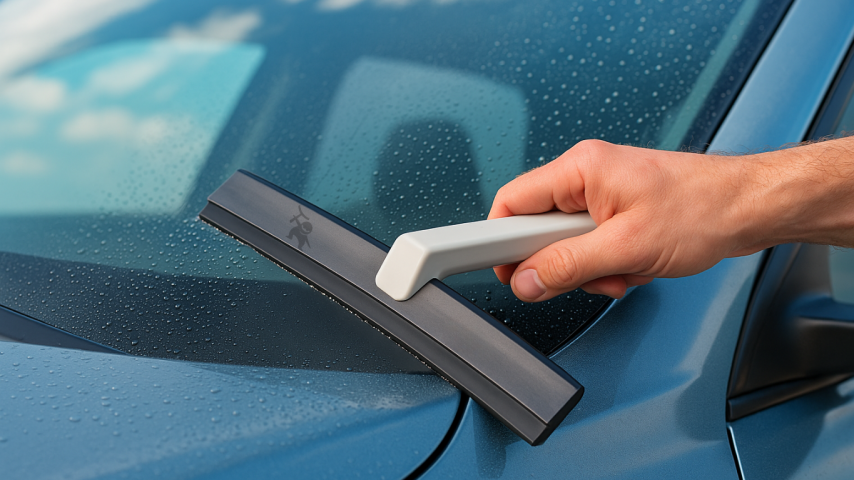
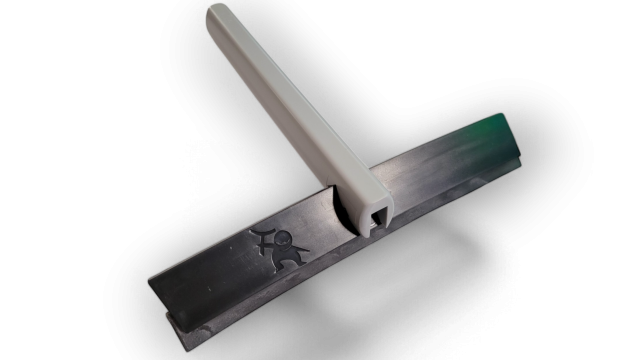
Despite the squeegee’s proven effectiveness, its design remained largely unchanged-until the advent of the KataCurv. Developed by professional window cleaners frustrated with the limitations of straight squeegees on curved automotive glass, the KataCurv features a patented curved design that hugs the windshield, ensuring full contact and a streak-free clean every time.
Unlike traditional squeegees, the KataCurv is purpose-built for both the inside and outside of curved windshields, as well as flat surfaces like mirrors and shower doors. Its replaceable rubber blade, widely available at hardware stores, ensures longevity and cost-effectiveness. The handle is designed for compact storage and protects the rubber when not in use. The KataCurv’s dual-sided capability makes it uniquely suited to the contours of modern vehicles, finally addressing the shortcomings that have plagued drivers for decades.
A New Standard for Clean Glass
The KataCurv represents the first significant leap in squeegee design since Anderson’s original patent. By embracing the professional squeegee method and adapting it for the unique challenges of automotive glass, the KataCurv allows anyone to achieve a spotless, streak-free windshield-inside and out. Whether used as a primary tool or for periodic deep cleaning, it sets a new standard for clarity and convenience.
In the long arc from Mary Anderson’s simple yet ingenious window cleaning device to the modern KataCurv, the squeegee’s evolution has finally caught up with the needs of today’s vehicles. Thanks to these inventors, drivers can now see the road ahead more clearly than ever before.
