- Bring Your Idea to Life -
Get Your Free Product Design Info Today!
Resource Articles
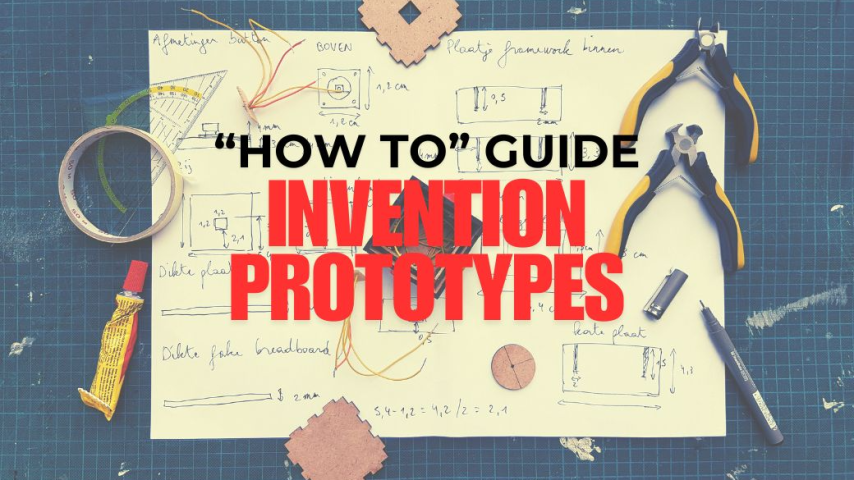
How to Make a Prototype of an Invention
By MarketBlast
- Bring Your Idea to Life -
Get Your Free Product Design Info Today!
You’ve come up with a brilliant invention idea,
but now you’re wondering, “How do I make a prototype of my invention?” Building
a prototype is one of the most exciting steps in the invention process. It
turns your concept into a tangible product that you can test, improve, and
present to potential investors or manufacturers. The good news? Making a
prototype doesn’t have to be complicated or expensive. With a step-by-step
approach, you can bring your idea to life, even if you have no experience with
prototyping.
In this article, we’ll guide you through the
entire process of making a prototype, from sketching your idea to creating a
functional model. We’ll also share tips on using affordable tools, protecting
your invention, and improving your prototype along the way.
Need Help with Patents or Trademarks?
MarketBlast® can refer you to top-tier, U.S. Registered
Patent Attorneys. Plus, you can submit
your patent directly to companies for royalty deals through our listed hunts.
What Is a Prototype?
A prototype is a preliminary version of your
invention that demonstrates its design, functionality, and usability. It can be
a simple mock-up or a fully functioning product, depending on your goals.
There are three main types of prototypes:
Concept Prototype: A basic visual
model to demonstrate the idea and structure.
Functional Prototype: A working version
of the invention to test functionality.
Production-Ready Prototype: A refined,
high-quality version that closely resembles the final product.
Making a prototype is an essential step in the
invention process because it helps you:
- Visualize your idea in real life.
- Identify and fix design flaws.
- Test functionality and usability.
- Show your product to investors or partners.
Now, let’s break down how to make a prototype
step-by-step.
Step 1: Sketch Your Invention Idea
The first step in making a prototype is to get
your idea on paper. A sketch helps you visualize your invention and communicate
it to others.
How to Sketch Your Invention:
- Draw your invention from different angles.
- Label key parts and describe their functions.
- Include notes on materials and dimensions.
You don’t need to be an artist—your sketch just
needs to convey the basic concept. If you prefer digital tools, you can use
Canva, Sketchpad, or Adobe Illustrator to create a polished design.
Step 2: Create a Digital Design or 3D Model
After sketching your idea, take it a step further
by creating a detailed digital design or 3D model.
Why Create a 3D Model?
- It helps you visualize dimensions and proportions.
- It’s useful if you plan to 3D print your prototype.
- It provides a professional blueprint for manufacturers.
Tools to Create a 3D Model:
Tinkercad: A free, beginner-friendly tool for 3D design.
Fusion 360: Professional-grade software for more
complex designs.
SketchUp: Great for technical drawings and models.
If you’re not comfortable creating a 3D model
yourself, you can hire a freelancer on platforms like Fiverr or Upwork to do it
for you.
Step 3: Choose the Right Prototype Type
Depending on your needs and budget, you can
choose from different types of prototypes.
Types of Prototypes:
Concept Prototype:
Purpose: To demonstrate the basic idea.
Materials: Paper, cardboard, clay, or foam.
Cost: Very low.
Best For: Early stages of development.
Functional Prototype:
Purpose: To test how your invention works.
Materials: Plastic, metal, wood, or electronics.
Cost: Moderate to high.
Best For: Validating functionality and fixing design
flaws.
Production-Ready Prototype:
Purpose: To showcase a refined version that resembles the
final product.
Materials: High-quality materials.
Cost: High.
Best For: Presentations to investors or manufacturers.
Choose the prototype type that best fits your
current stage and goals.
Step 4: Gather Materials and Tools
Once you’ve decided on the type of prototype,
it’s time to gather materials. If you’re building a simple prototype, you can
use household items. For more advanced prototypes, you may need specialized
tools.
Common Materials for Prototypes:
- Cardboard or foam board
- Plastic sheets
- Wood or metal
- Clay or modeling foam
- Electronics (for functional prototypes)
- 3D printed parts
- Tools You May Need:
- Scissors or craft knives
- Glue gun
- Soldering iron (for electronics)
- Sandpaper and paint (for finishing touches)
- 3D printer (optional)
If you need access to specialized tools, consider
visiting a local makerspace. Makerspaces are community workshops that offer
access to equipment like 3D printers, laser cutters, and woodworking tools.
Step 5: Build a DIY Prototype
For many inventors, a DIY prototype is a great
starting point. Here are some tips for building your prototype at home:
- Use cardboard or foam to create a basic model.
- Mold clay or modeling foam for curved or complex shapes.
- Use plastic sheets for transparent or flexible parts.
- Incorporate electronics if your invention involves technology.
Tip: Don’t worry about perfection at this stage.
Focus on creating a working model to test your idea.
Step 6: Use 3D Printing for Precision
If your prototype requires precise parts or
intricate designs, consider using 3D printing. This technology allows you to
produce accurate models quickly and affordably.
How to Access 3D Printing:
Buy a Home 3D Printer: Consumer-grade 3D
printers start around $200.
Visit a Makerspace: Many makerspaces
offer 3D printing services.
Use Online Services: Platforms like
Shapeways or Sculpteo allow you to upload your design and have your prototype
printed and shipped to you.
Step 7: Test and Refine Your Prototype
Once you’ve built your prototype, it’s time to
test it thoroughly. Look for any design flaws or usability issues.
Questions to Ask During Testing:
- Does the prototype function as intended?
- Are there any parts that need to be adjusted or replaced?
- Is the product easy to use?
Prototyping is an iterative process, so don’t be
discouraged if your first version isn’t perfect. Make improvements and create
new versions as needed.
Step 8: Protect Your Invention
Before showing your prototype to anyone, protect
your intellectual property (IP) to ensure your idea is safe from theft.
How to Protect Your Invention:
Non-Disclosure Agreement (NDA): Have anyone who
views your prototype sign an NDA.
Provisional Patent Application: File a provisional
patent with the USPTO to secure “patent pending” status.
Taking these steps helps safeguard your invention
as you move forward.
Step 9: Present Your Prototype to Investors or
Manufacturers
With a refined prototype in hand, you’re ready to
present your invention to potential investors, partners, or manufacturers.
How to Make a Strong Presentation:
Prepare a Pitch: Clearly explain
your invention’s purpose, target market, and unique features.
Demonstrate Functionality: Show how your
prototype works.
Highlight Improvements: Share how you’ve
refined your design.
A well-made prototype can make a big impact when
seeking funding or partnerships.
Final Thoughts
Making a prototype of your invention is an
essential step in turning your idea into reality. Whether you start with a
simple DIY model or work with professional services, the key is to keep
testing, improving, and refining your design. With persistence and creativity,
you can create a prototype that brings your invention one step closer to
success.
- Bring Your Idea to Life -
Get Your Free Product Design Info Today!
Founded with the vision to transform the landscape for
monetizing and commercializing innovative products and brands, MarketBlast® is
the leading Product Hunt and Submission Management Platform connecting buyers
and sellers across the globe. Since our inception, we have been dedicated to
empowering small companies, startups, entrepreneurs and emerging brands to
connect directly with industry companies and accelerate their own marketing and
sales efforts to achieve lasting results.
At MarketBlast®, we believe that innovation thrives
on collaboration. Our platform provides seamless access to a diverse network of
companies, proprietary content marketing and advertising programs, and access
to a wide range of resources designed to support the overall journey toward success.
For more information on signing up
for a premium membership or to start a content marketing campaign for your
products, email info@marketblast.com or visit MarketBlast®.
Other
Related Articles
Where to
Find Inventor Help Resources
How to Find
Invention Assistance Companies
